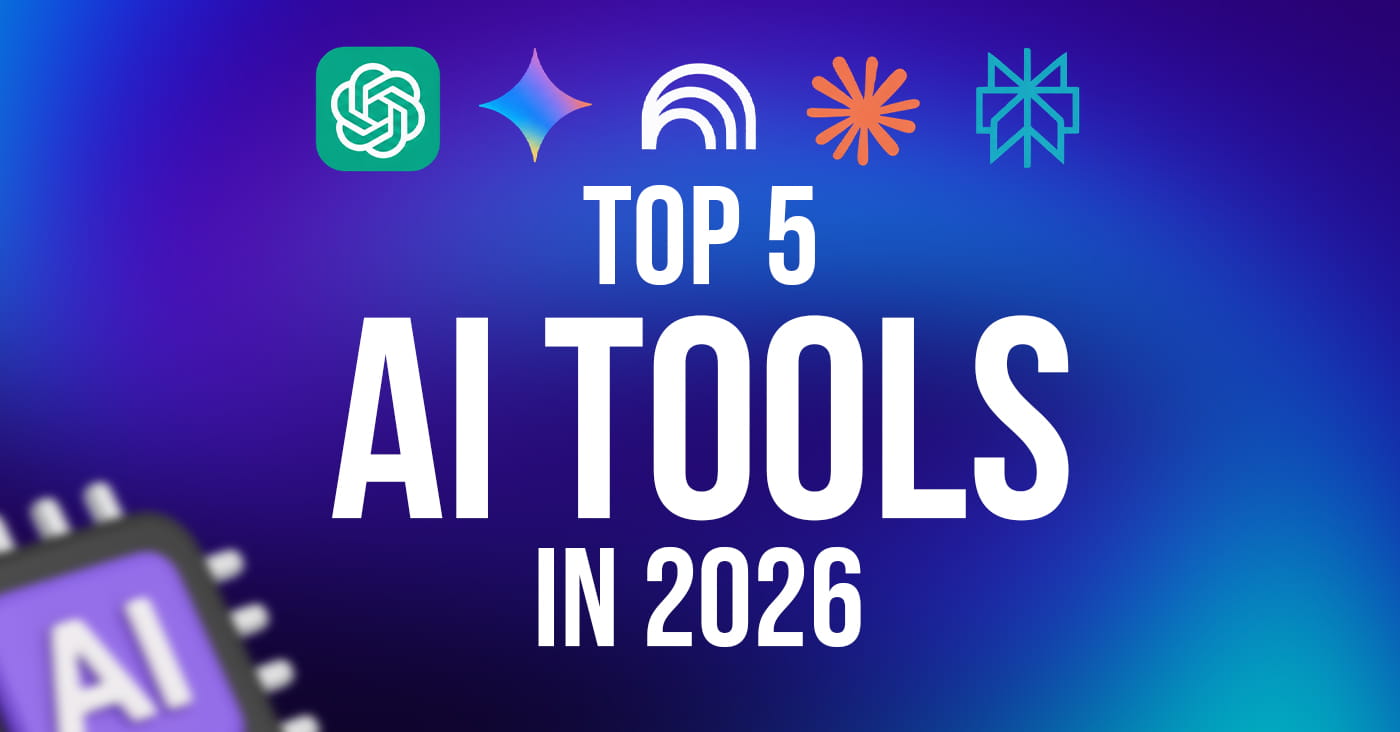
The number of AI tools available today keeps growing, and one question comes up again and again: which tool is best for what? In this post, we’ll break down five of the most talked-about AI tools right now: ChatGPT, Claude, Gemini, NotebookLM, and Grok. Each one has its own strengths and ideal use cases, so understanding the differences will help you pick the right tool for your needs.
1. ChatGPT (OpenAI)
ChatGPT is currently the most widely recognized AI chatbot, built by OpenAI. It’s used extensively for general conversation, essay writing, brainstorming ideas, coding help, and answering everyday questions.
- Strengths: Massive user base, a broad ecosystem of plugins and integrations, and a simple, easy-to-use interface
- Best for: General users, students, content writers
2. Claude (Anthropic)
Claude is built by Anthropic and is known for deep analysis, handling long documents, and producing safe, thoughtful output. Features like Artifacts, Skills, and Claude Code have turned Claude into more than just a writing assistant; it can act as a capable coding agent for complex, multi-step tasks.
- Strengths: Strong long-context understanding, precise and well-organized writing, solid performance on coding and agentic tasks
- Best for: Professionals, developers, researchers, business analysts
3. Gemini (Google)
Gemini is Google’s AI model, deeply integrated with Google’s own ecosystem Gmail, Docs, Search, and more. This makes it especially convenient for anyone who already relies heavily on Google’s products day to day.
- Strengths: Direct integration with Google Workspace, strong multimodal capabilities (text, image, video), access to real-time information
- Best for: Google Workspace users, anyone working with multimedia content
4. NotebookLM (Google)
NotebookLM stands apart from the others; it’s essentially a research and note-taking assistant. You upload your own documents, PDFs, or notes, and NotebookLM analyzes strictly from those sources to generate summaries, answer questions, and even produce audio-podcast-style content.
- Strengths: Answers grounded in your specific source material, lower risk of made-up information, excellent for digesting research papers or lecture notes
- Best for: Students, researchers, anyone doing deep work with a specific set of documents
5. Grok (xAI)
Grok is built by Elon Musk’s company xAI and is directly connected to X (formerly Twitter). This gives it a distinct edge when it comes to real-time trends, social discussions, and recent events.
- Strengths: Real-time connection to social media data, a more open and less filtered response style
- Best for: Anyone who wants to stay current on trending topics, news, or social conversations
Comparison Table
| Tool | Core Strength | Best For |
| ChatGPT | General use, broad ecosystem | General users |
| Claude | Deep analysis, coding, writing | Professionals, developers |
| Gemini | Google integration, multimodal | Google Workspace users |
| NotebookLM | Source-grounded research | Students, researchers |
| Grok | Real-time social information | Trend-conscious users |
Which One Should You Choose?
Picking the right AI tool really comes down to what you need it for. If you’re looking to:
- Have general conversations or write content – ChatGPT or Claude
- Do complex analysis or coding – Claude
- Work directly with Google’s tools – Gemini
- Research specific documents – NotebookLM
- Stay on top of real-time trends and social discussion Grok
Many people now use more than one tool at once, for example, Claude for writing, NotebookLM for research, and Grok for keeping up with trends. That way, you get the best of each tool where it matters most.
Conclusion
ChatGPT, Claude, Gemini, NotebookLM, and Grok each bring something different to the table. It’s hard to crown one as “the best” overall, because it really depends on what kind of work you’re doing. Once you understand your own needs, choosing the right tool becomes a lot easier and that’s when you get the most value out of AI.